
Moving beyond theory: reimagining energy education for local impact
In the rapidly evolving renewable energy sector, the distance between a university lecture hall and the technical realities of the field can often feel vast. Bridging this gap is not merely an academic exercise; it is a critical requirement for achieving Sustainable Development Goal 7 (SDG7): ensuring access to affordable, reliable, sustainable, and modern energy for all.
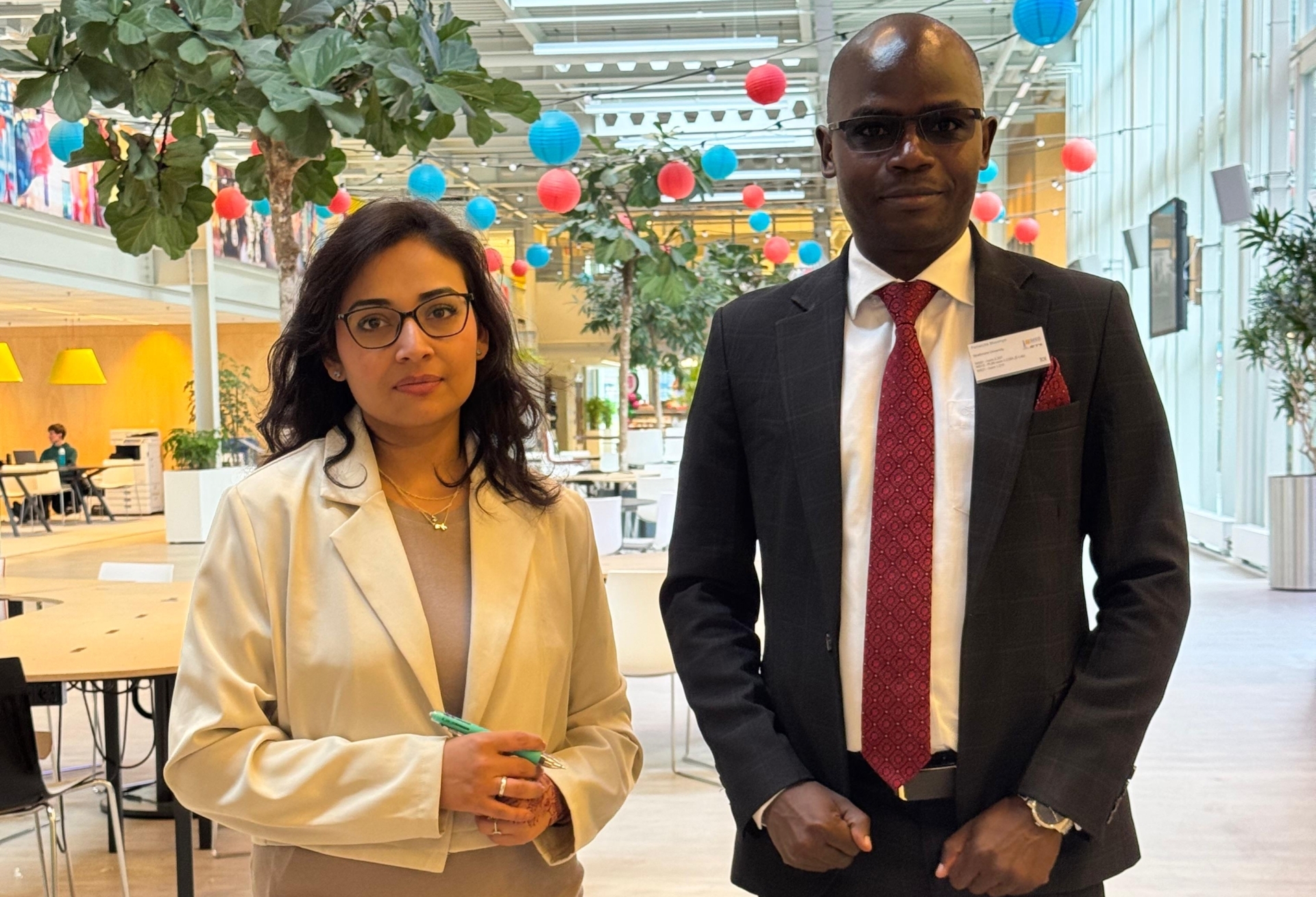
Dr Kiran Siraj (left) at the 2026 SEED Conference
At the recent 2026 Sustainable Energy Education (SEED) Conference in Utrecht, the Transforming Energy Access Learning Partnership (TEA-LP) sought to address this challenge head-on. We were honoured to be joined by Dr. Kiran Siraj, a long-standing partner from the Lahore University of Management Sciences (LUMS), who led a pivotal breakout session during our workshop on Experiential and Context-Responsive Learning.
The Challenge: Curricula in a Decentralised World
As the energy landscape shifts from centralised grids to diverse, decentralised solutions like mini-grids and solar home systems, the way we train the next generation of engineers and policymakers must shift accordingly.
Alongside a diverse group of academics, researchers, and industry professionals, Dr. Siraj interrogated the current state of energy education. The goal was to move beyond abstract theory and identify a concrete framework for curriculum evolution.
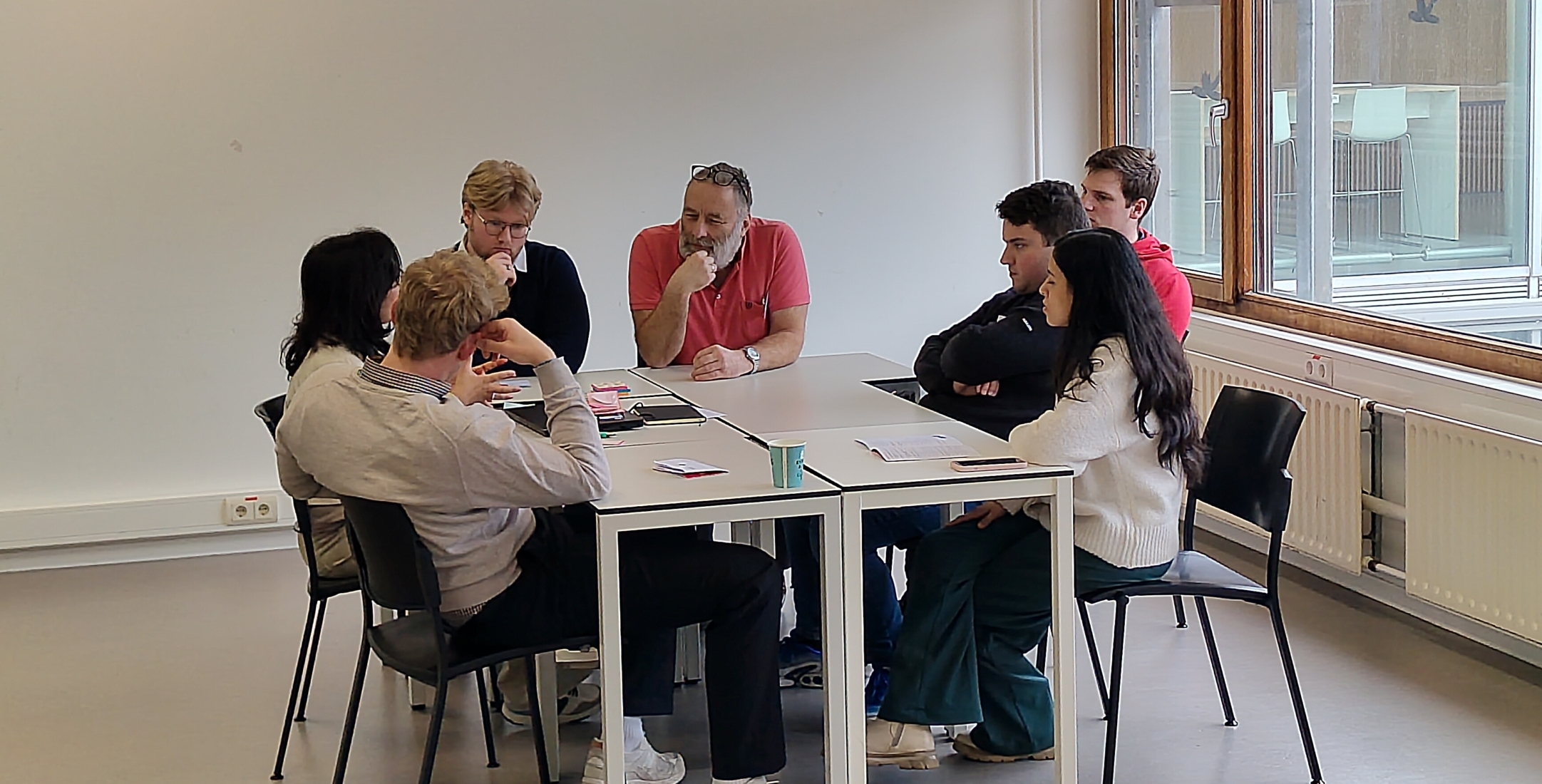
Dr Kiran Siraj leads a breakout group with European sustainable energy education experts
A Framework for Change: START, STOP, and CONTINUE
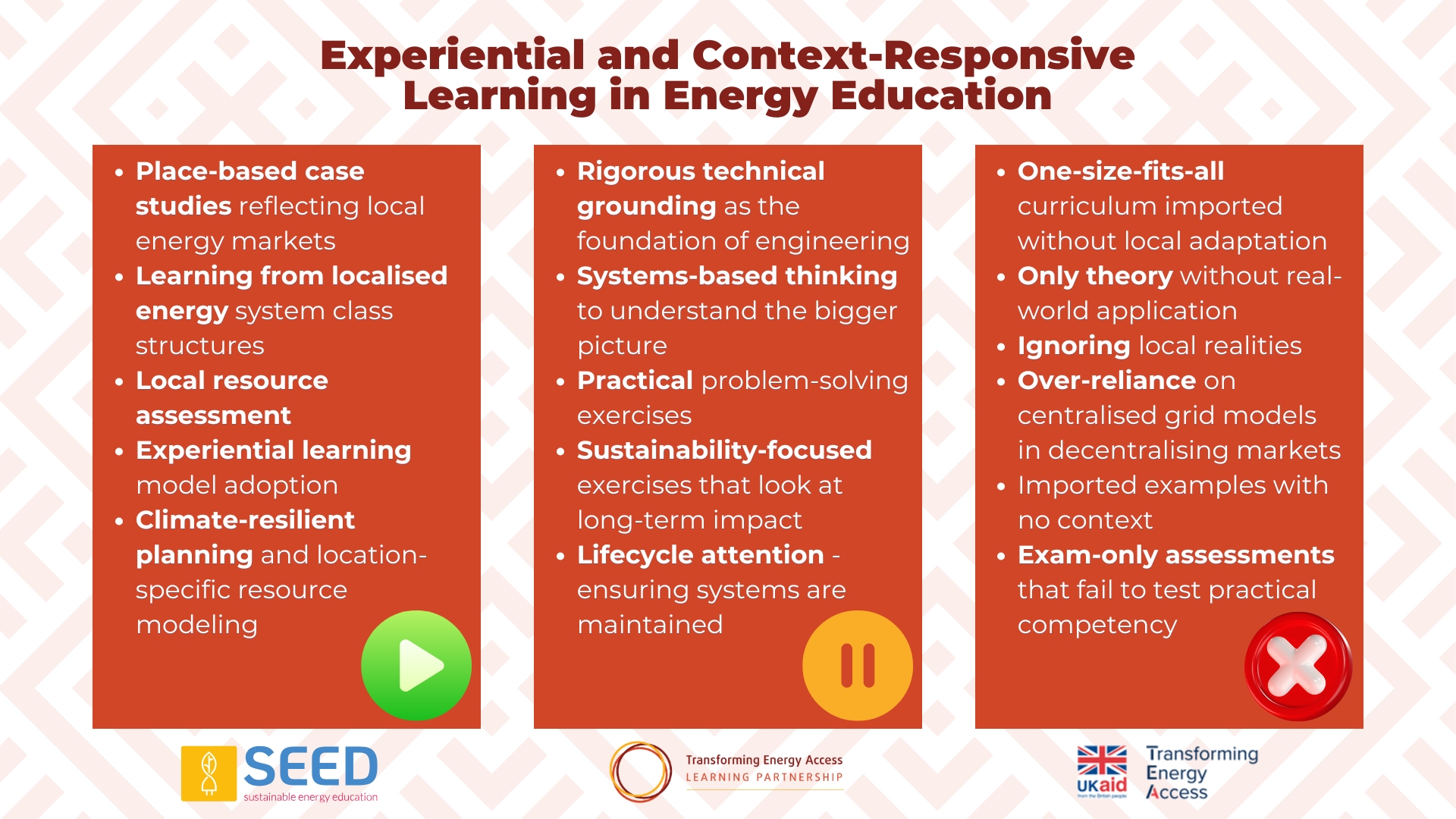
To drive actionable change, the workshop utilised a “Start, Stop, Continue” model. This allowed participants to strip away outdated practices while doubling down on the pedagogical strengths that already exist within our partner universities.
The 4 Pillars of Actionable Energy Education
The findings from Dr. Siraj’s group coalesced into four “North Star” principles that TEA-LP believes should underpin modern curriculum design:
- Place-Based & Context-Responsive Energy education cannot be “copy-pasted” from one geography to another. To be effective, curricula must be grounded in local socio-economic realities and specific technical constraint,
-
Experiential Learning as the Standard While theoretical mastery remains the baseline, real-world project tasks are the ultimate differentiator. Students must engage with the “messiness” of real energy systems before they enter the workforce.
-
The Technical-Practical Link We must bridge the gap between high-level technical knowledge and its application in complex, often remote, environments. This involves understanding not just how a technology works, but how it is maintained within a specific local ecosystem.
-
Inclusivity of Realities Modern curricula must account for the full spectrum of energy landscapes, moving beyond traditional centralised models to include urban mini-grids, remote off-grid solutions, and hybrid systems.
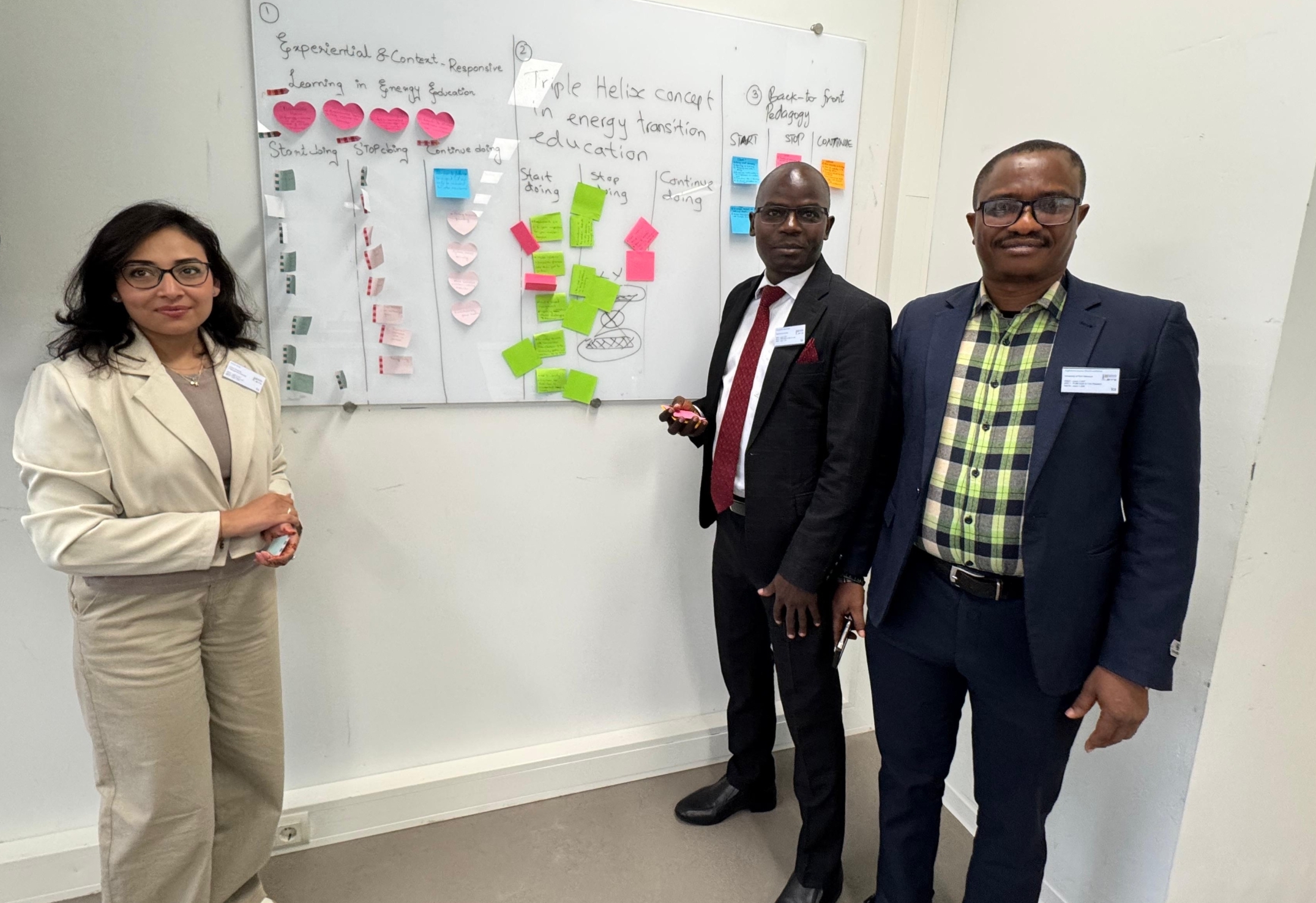
Dr Kiran Siraj compiles her findings alongside Dr Fenwicks Musonye and Prof Ogheneruona Diemuodeke
Insights from the Workshop
The infographic below summarises the core actionable items identified by our partners in Utrecht. These insights serve as a roadmap for institutions looking to align their educational offerings with the urgent needs of the energy transition.
Looking Forward: Developing “Systems Thinkers”
The transition to sustainable energy requires more than just technical specialists – it requires systems thinkers. These are professionals who can navigate the legal, financial, and social nuances of their local energy markets while applying rigorous engineering principles.
At TEA-LP, we remain committed to supporting our 30+ partner universities in adopting these experiential models. By focusing on context and local impact today, we are powering the leaders who will build a sustainable future for tomorrow.
A big thank you to the organisers of the SEED conference and to the TEA-LP delegates contributions in delivering a successful workshop.
– Written by Kai Forster
The TEA-LP is supported by UKAID under the Transforming Energy Access Platform.

