
From Sri Lanka to London: two events, one shared conviction
I do not use the word “epic” lightly, but June 2026 has been one of the most inspiring and epic months in my career – let me tell you why.
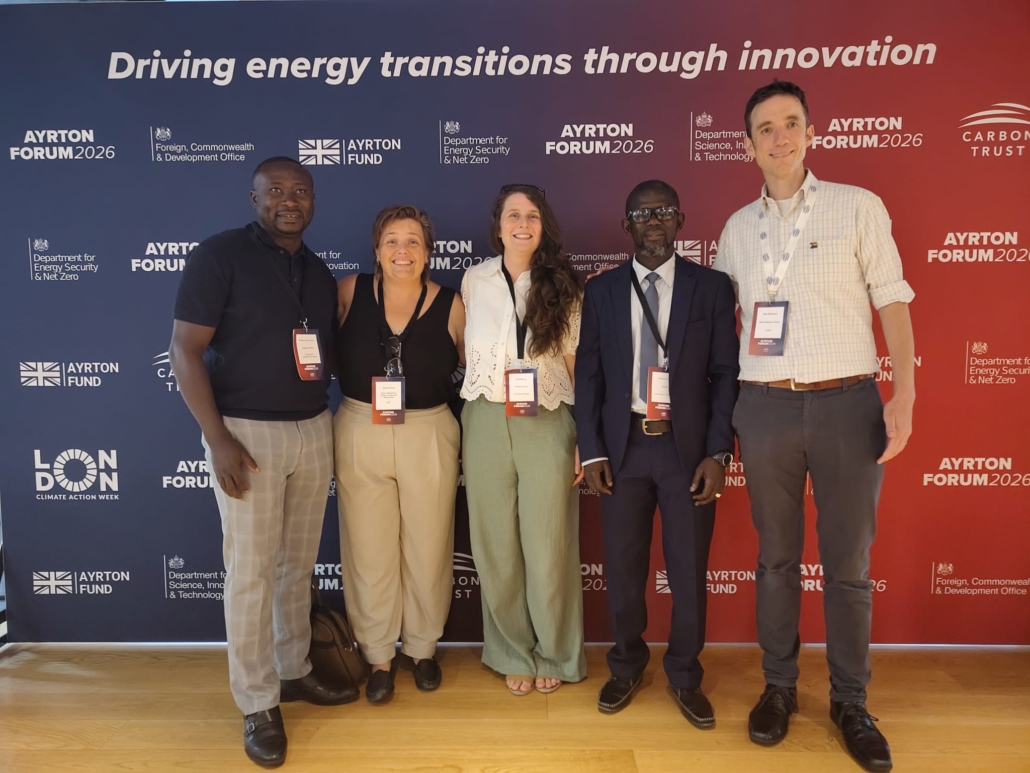
Jiska with colleagues from the SHINE project at the Aryton Forum 2026. From left: Richard Oduro (University of Leeds), Jiska de Groot, Charlotte Ray (Bristol University), Dr Embrima Sonko (University of the Gambia) and Sam Williamxon (University of Bristol and FCDO Senior Research Fellow). Source:JDG
The WePower Regional Conference in Sri Lanka
A connecting of minds and a connecting of hearts
First, I represented the TEA Learning Partnership at the 4th WePOWER (Women in Power Sector Professional Network in South Asia) Regional Conference, held on June 4–5, 2026,in Negombo, Sri Lanka. This event was jointly organised by the World Bank and the Asian Development Bank, and brought together 150 energy leaders, utilities, and international delegates to focus on gender equality and a people-centric energy transition.
I have not often been in a room so filled with excited and knowledgeable colleagues fighting for gender equality, including renewable energy agencies, NGOs, academics, national chapter representatives, development partners, senior executives from energy and utilities companies, and government officials. All of us were together with the same ambition, namely to advance women’s participation and leadership in the energy sector. Its work across South Asia is as diverse as its stakeholders, from policy dialogues at ministerial level, school groups learning about energy, all the way down to the young girl in Nepal looking up at a female professor and thinking: that could be me!
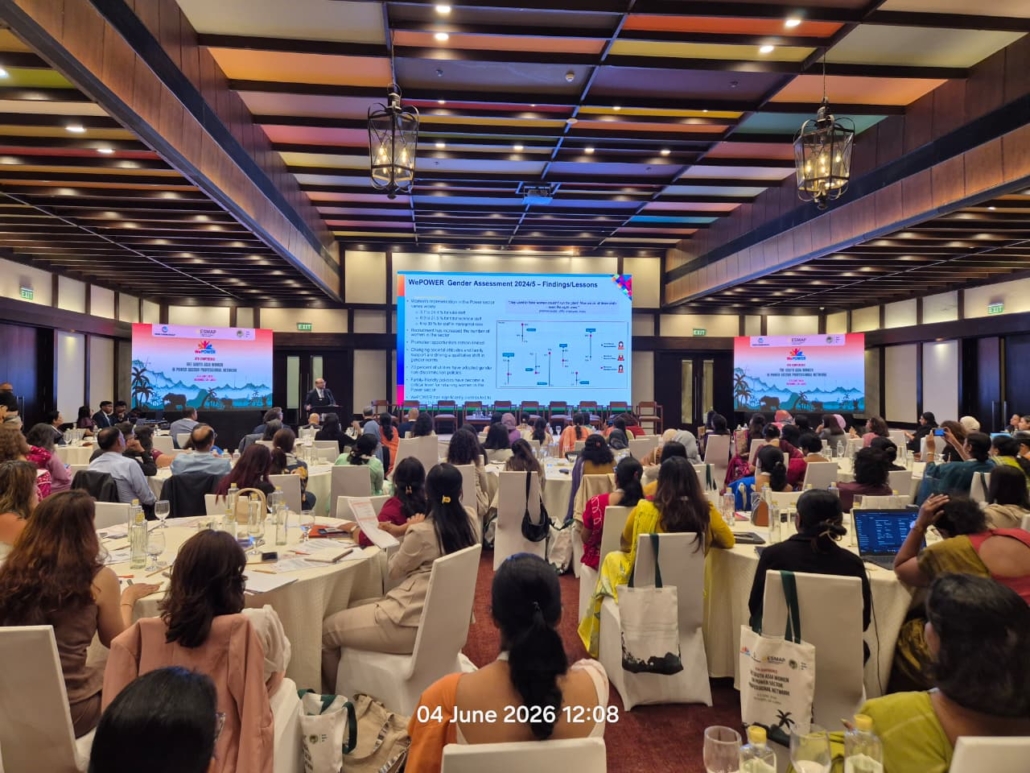
WePower conference, Sri Lanka. Source: JDG
The conference agenda itself reflected WePower’s philosophy of stakeholder driven action. Under the phrase ‘you tell us how you are doing and what you are doing’, we heard from senior management of major companies, national chapters, development partners, beneficiaries and participants themselves. This approach, in my opinion, brought us to a place of humility as a starting point from which to understand the real complexities of driving positive gender impacts in the energy sector. The WePower conference relied on the people in the room to show us the problems they encounter in advancing gender equality. Participants were not just presenting and sharing their successes, but also deeply listening to others.
Two messages in particular stood out to me. Firstly, that the barriers to hiring women remain based on perception, not capability. Secondly, we do not just need engineers. As our energy transition expands, so does our need for a large variety of, task-driven skills. This requires, what was termed ‘Professors of Practice’ at our universities to teach differently for a world that is changing fast. I could not agree more.
The Ayrton Forum in London
Honest discussions and four more years of Transforming Energy Access
Following the highs of Sri Lanka, the Ayrton Forum, which took place in London on June 22, 2026, was the UK Government’s Flagship event during London Climate Action Week. It gathered over 300 delegates to mark five years of the Ayrton Fund and announce its extension through 2030 to accelerate clean energy access in emerging economies. The Forum inspired me with its high-quality panels and honest discussions. This year felt particularly energising, and not just because of the positive confirmation of four more years of Ayrton Fund support.

From lefr: Chrispin Gogoda, Caroline Ward, Vanesa Castan Broto, Whitney Pailman, Yacob Mulugetta and Elvis Shoko at the Aryton Forum.
The Honorary Doctor Ruth set the tone early. In her Keynote presentation, she made energy access personal, through stories, and through showing that when you put yourself out there, you invite things to happen. She invited us to do the same.
On my own panel on next generation solar, colleague Emeka Oguzie from FUTO in Nigeria brought a proverb that stayed with me long after the session ended: “You cannot shave a man’s head in his absence.” It sounds simple, but it cuts to the heart of one of the most persistent challenges in our sector. Readiness across energy value chains requires skills across those value chains. And the people that those value chains serve, must be part of building them, not asked to come along for the ride after decisions have already been made.
This connects directly to what I think is the most important shift needed for supply chains at scale and driving energy access on the ground. We need to move away from reactive, top-down, project-based approaches to workforce and skills development that creates a pipeline of locally relevant expertise in addition to the globally relevant expertise. What is really needed is to engage and integrate stakeholders early in technology development, not after the fact. It boils down, again, to working in functionally equitable partnerships that are both anticipatory of local needs and grounded in a real understanding of the context in which you want to scale.
Alice Goodbrook representing the Energy Catalyst added another layer that I agree is essential: Genuine collaboration requires face-to-face trust. Many partnerships that struggled after COVID-19 were ones where that trust had never been built in person. The ones that worked knew each other from before. That trust was already there. It is easy to underestimate how much that matters.
For TEA-LP, it was a privilege to be at both events alongside colleagues from all over the world. What stuck with me is that it is the people, trust, and genuine partnership are what will get us to energy access at scale.
– written by Jiska de Groot

