
MPhil Energy Studies students connect classroom learning with practice
MPhil in Energy Studies students from the Fourah Bay College, University of Sierra Leone recently visited the Bankasoka Hydropower Plant (2 MW) and Makoth Solar PV Power Plant (25 MW), gaining first-hand insight into renewable energy engineering in practice.
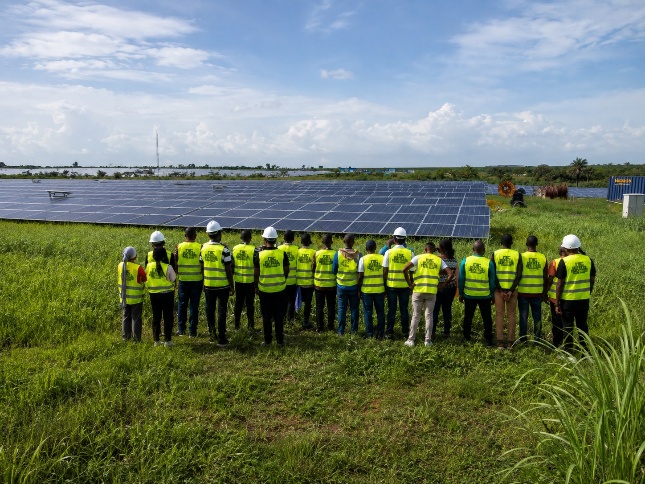
Mphil students stand at the Makoth Solar PV Power Plant, Sierra Leone. Source: Prof. Kelleh Mansaray
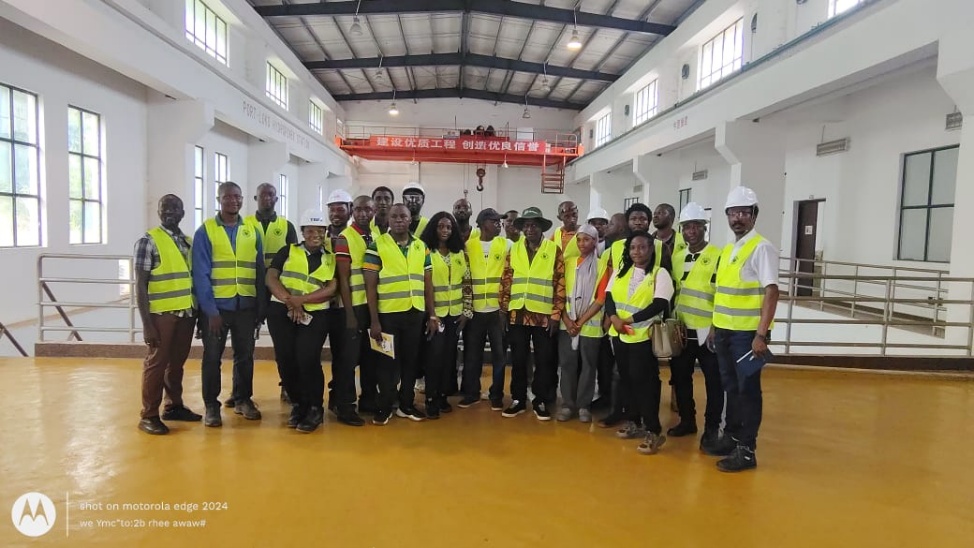
Mphil Energy Studies 2025 cohort. Source: Prof. Kelleh Mansaray
The field visits provided students with valuable first-hand experience of renewable energy technologies in operation, allowing them to connect concepts learned in the classroom with real-world engineering practice.
As student Babai Jalloh shared their experience; “As part of our MPhil in Energy Studies programme at the University of Sierra Leone, I had the privilege of participating in an educational field visit to the Bankasoka Hydropower Plant and Makoth Solar PV Power Plant. The experience was highly valuable, as it provided an opportunity to move beyond classroom-based learning and observe the practical application of renewable energy technologies in Sierra Leone. The visit to the Bankasoka Hydropower Plant provided practical insight into hydropower generation and the engineering systems involved in converting the energy of flowing water into electrical power. At the Makoth Solar PV Power Plant, we gained first-hand exposure to solar photovoltaic technology and its role in supporting the expansion and diversification of Sierra Leone’s renewable energy sector. Seeing these systems in operation helped to strengthen my understanding of concepts discussed throughout the MPhil programme particularly the Local Solutions for Energy Access TEA-LP Course. I believe such an initiative is essential in preparing the next generation of energy professionals to contribute effectively to a more sustainable and energy-secure Sierra Leone.”
The interactive site tours, led by experienced engineers, also gave students an opportunity to engage directly with industry professionals and learn about the practical considerations, impacts and constraints associated with renewable energy projects.
For the students, the visits reinforced the value of experiential learning and demonstrated that renewable energy engineering is not only a theoretical discipline, but one with tangible applications and opportunities to address energy access challenges. As another student reflected, “I enjoyed seeing how electricity is generated from both hydro and solar energy and learning about the equipment used. The visit helped me connect what I learn in class with real life applications.”
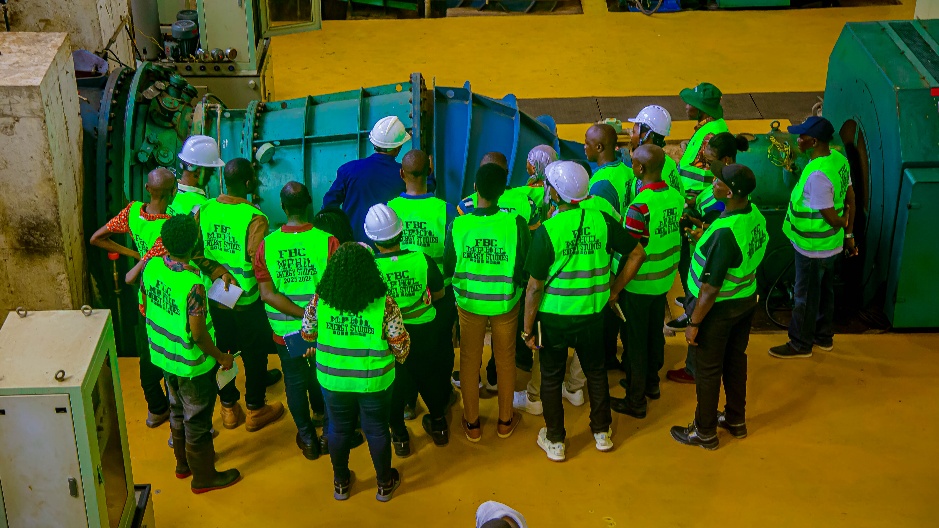
The Site Engineer explaining operational functions of the hydropower turbines. Source: Prof. Kelleh Mansaray
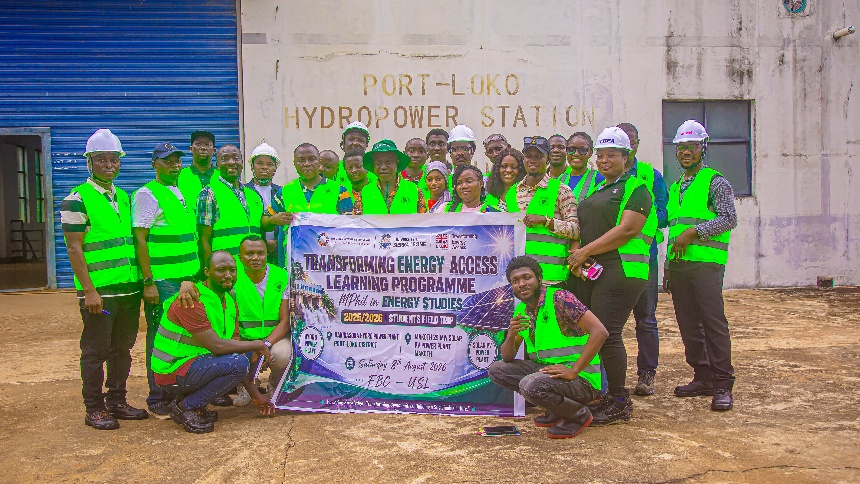
Group photo of field trip attendees. Source: Prof. Kelleh Mansaray
Beyond the technical learning, these facilities have the potential to serve as living engineering “show houses”, inspiring students to see renewable energy not just as a field of study, but as a practical discipline with exciting opportunities for innovation and impact.
This is a great example of the value of taking learning beyond the classroom!
The TEA-LP is funded by UKAID under the Transforming Energy Access Platform.

