
Solar System Design and Installation workshop: showcasing practical energy education at UDUSOK
The recent Solar System Design and Installation workshop, held at The Centre for Advanced Science Research and Analytical Services (CASRAS) at partner university Usmanu Danfodiyo University Sokoto (UDUSOK), provided a unique opportunity in strengthening renewable energy education for 39 students. Sponsored through the TEA-LP Rolling Fund, the workshop successfully combined theory with hands-on practice, bridging the gap between classroom learning and real-world application.
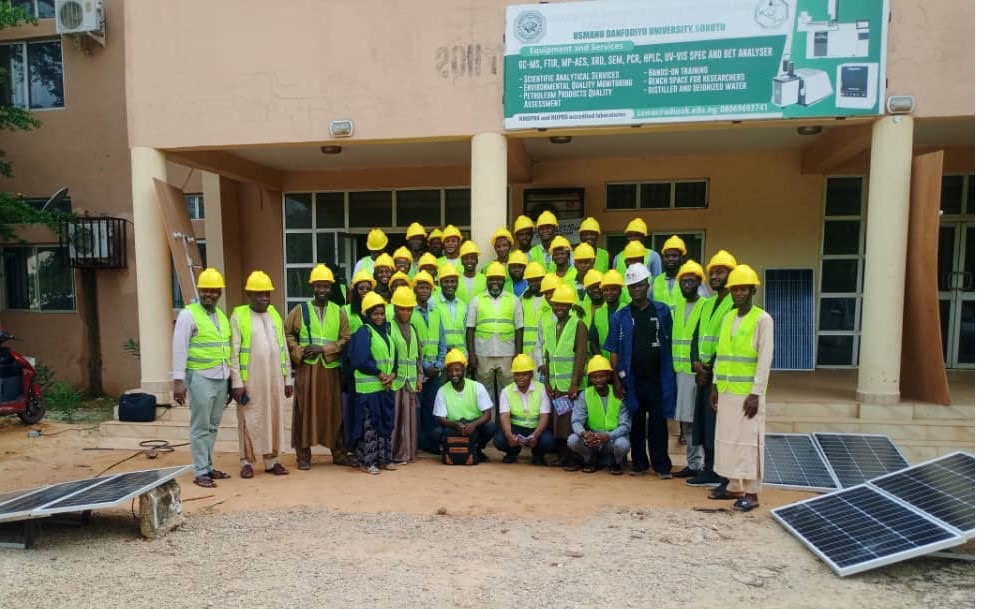
A Facilitator’s Perspective
The workshop facilitator, Professor Misbahu Ladan Mohammed, highlighted that the primary goal was to equip students with practical skills in solar system design, installation, and maintenance. This goal was achieved through a balance of foundational theoretical sessions and immersive practical exercises. A particularly rewarding moment for the Prof. Mohammed was witnessing the students’ confidence grow as they successfully completed installations—an experience that transformed abstract concepts into tangible achievements.
The guided tour of the 2 MW UDUS Solar Project provided students with a unique opportunity to see large-scale solar infrastructure in action. This exposure to the scale, complexity, and operational realities of commercial solar projects deepened their understanding and appreciation for renewable energy technologies. Despite minor challenges in ensuring all students had sufficient hands-on time, the facilitator addressed this by restructuring sessions into smaller groups—an adjustment that ensured more meaningful participation for everyone.
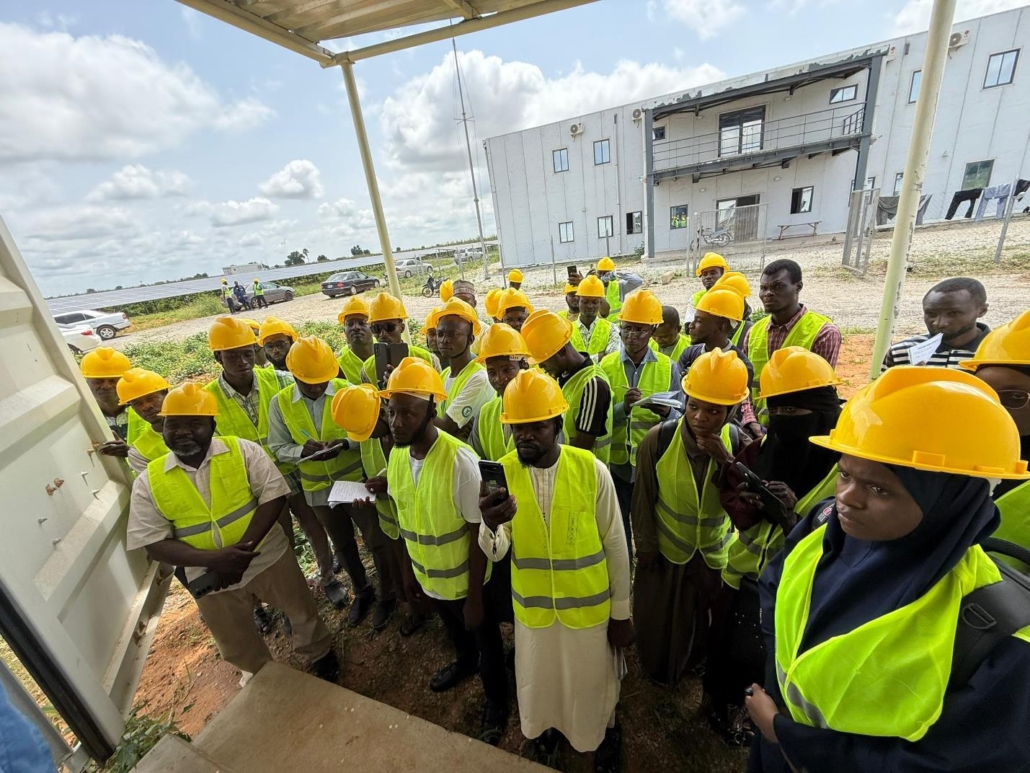
Professor Mohammed further shared that workshops like this contribute significantly to advancing renewable energy education in Nigeria. By equipping students with practical skills and real-world exposure, the program builds capacity for future professionals who can drive clean energy transitions in their communities. Looking ahead, adding advanced topics such as energy storage, grid integration, and industry guest speakers to future sessions were mentioned for future workshops.
Student Voices
Feedback from participating students confirmed the workshop’s impact. Quantitatively, their responses were overwhelmingly positive:
- Overall satisfaction: 4.55/5
- Relevance to Master’s program: 4.8/5
- Hands-on experience: 4.5/5
- Trainer expertise: 4.6/5
- Likelihood to apply learning: 4.6/5
- Logistics and organization: 4.5/5
- Recommendation to peers: 98%
Students consistently highlighted the value of the hands-on sessions, which helped them move beyond theory to practice. One student reflected that they could now confidently differentiate between types of photovoltaic panels, while another emphasised learning system sizing – a skill directly transferable to real-world projects. Several noted that mastering solar installation skills would be instrumental in their future careers, opening pathways into both employment and entrepreneurship in Nigeria’s growing renewable energy sector.

The workshop materials were also praised for their relevance, blending practical and theoretical elements. While most students were fully satisfied, a few suggested that future workshops be extended over more days to allow deeper coverage of topics and more time for practice. Others requested additional themes, including hydrogen fuel, advanced PV design, safety, and system maintenance.
Impact Beyond the Workshop
The combined feedback from the participating students shows that this workshop was truly a transformative learning experience. Students left with greater confidence, practical skills, and a stronger sense of readiness to contribute to Nigeria’s renewable energy future. Professor Mohammed’s reflections reinforce this impact, underscoring how exposure to real-world projects and industry practices enhances the learning journey.
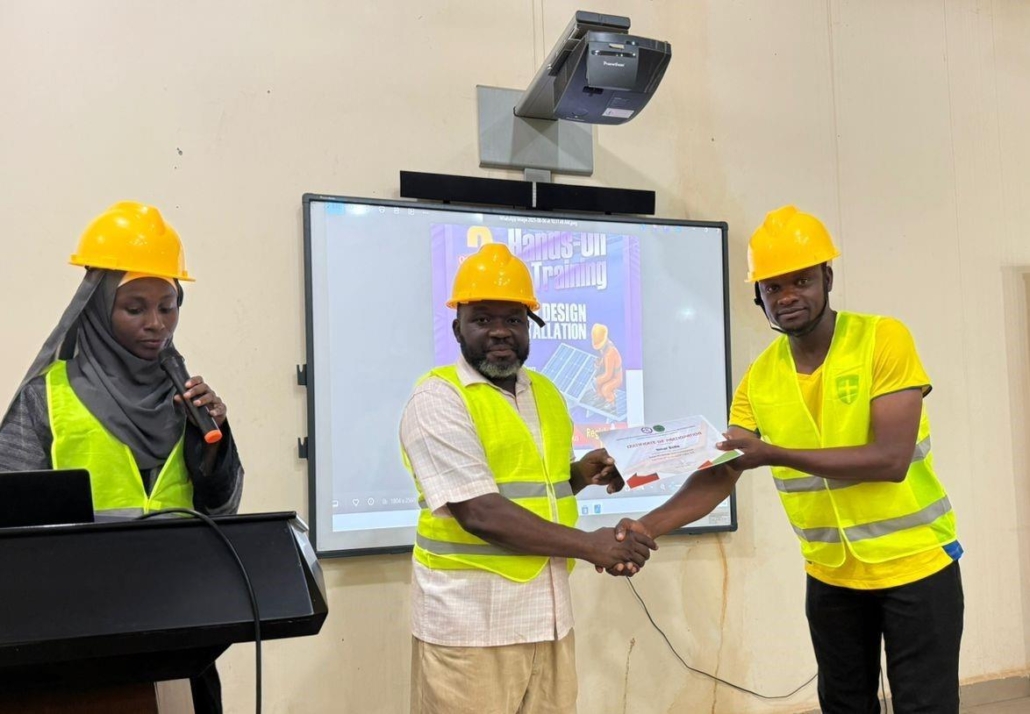
We are delighted that the TEA-LP Rolling Fund was able to support a workshop like this, one that aligns with UDUSOK’S TEA-LP supported MSc programme and more broadly to SDG7. By integrating hands-on learning with academic study, such initiatives create a new generation of renewable energy professionals equipped to design, implement, and scale clean energy solutions in their communities and beyond.
Conclusion
The Solar System Design and Installation Workshop at UDUS achieved its goals of empowering students with practical knowledge and inspiration for their careers. With high satisfaction ratings, nearly universal recommendations, and visible enthusiasm among participants, the program stands as a model for experiential renewable energy education. As the facilitator and students both emphasised, the next step lies in expanding the scope of future workshops – introducing advanced topics, longer training durations, and stronger industry connections.
Ultimately, the workshop not only advanced academic learning but also ignited a sense of purpose among students, preparing them to become leaders in Africa’s renewable energy transformation.

