
Independent University, Bangladesh Students Visit Cox’s Bazar Wind Power Plant
Students from the Independent University, Bangladesh (IUB), a partner of the Transforming Energy Access – Learning Partnership (TEA-LP) second cohort of the Mini-Grids: Planning & Design course recently undertook a field visit to the 60 MW Wind Power Plant in Cox’s Bazar, one of Bangladesh’s first large-scale, grid-connected wind installations, bridging the gap and connecting in-class theory with real-world practical applications. The experience allowed students to observe a modern renewable energy project in operation.
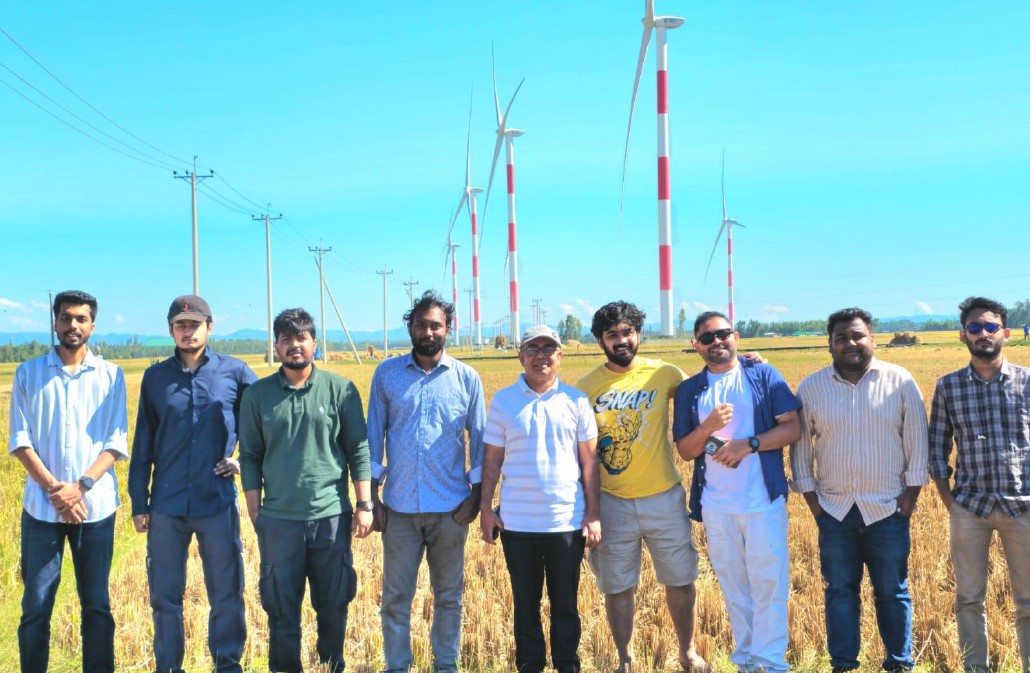
Students from the second cohort of IUB’s Mini-Grids: Planning and Design course visit the 60MW Wind Power Plant in Cox’s Bazar, Bangladesh.
A Landmark Renewable Energy Project
The Cox’s Bazar Wind Power Plant (also known as the Khurushkul or US–DK Wind Power Plant) features 22 horizontal-axis turbines that are each rated at 3 MW optimised for coastal wind conditions. The project achieved grid connection in October 2023 and is expected to supply approximately 145,600 MWh of clean electricity annually under a long-term Independent Power Producer agreement with the Bangladesh Power Development Board.
Through structured site walkthroughs, students explored turbine placement, transformer systems, and the general operational context of a coastal utility-scale renewable facility.
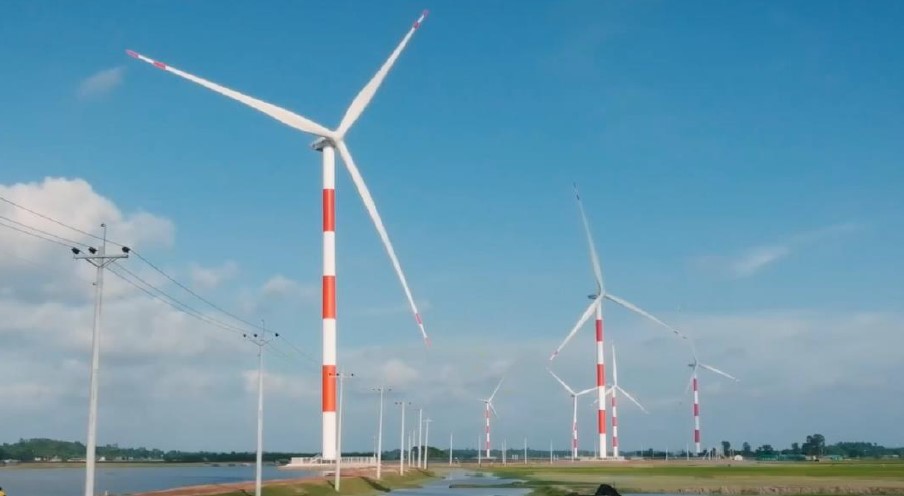
The 60MW Wind Power Plant at Cox’s Bazar, with turbines standing at 110m tall.
Why Experiential Learning Matters
While classroom lessons explain key theory, design principles, resource assessment, and system modeling, field exposure allows students to:
-
Understand turbine scale and structural engineering
-
Observe coastal siting considerations and environmental conditions
-
Explore how low-voltage generation is stepped up and fed into the national grid
-
Appreciate the practical challenges and benefits of large renewable deployments
This type of learning deepens confidence, supports capacity building, and improves students’ readiness to work in real project settings, all of which are important aspects of renewable energy education.
Student Reflections
Feedback from students confirmed the visit’s impact, as they reported a stronger understanding of turbine operation, mini-grid applications, and the broader role of wind energy in reducing fossil-fuel dependence and supporting national sustainability goals. They valued seeing how design, planning, and environmental considerations translate into functional infrastructure.
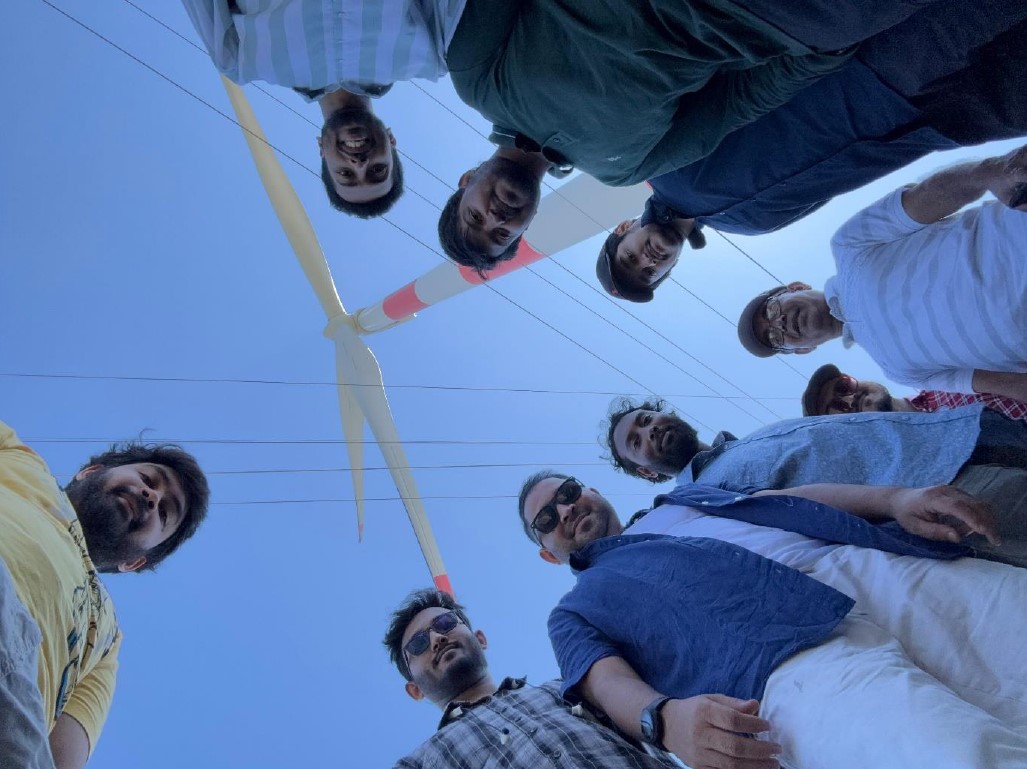
The IUB students during the site visit with their lecturer, Mohammad Rejwan Uddin.
Strengthening Future Energy Leaders
TEA-LP and its university partners are committed to integrating hands-on learning opportunities into curriculum delivery. Site visits of this kind strengthen technical competence, sharpen analytical thinking, and inspire the next generation of renewable-energy practitioners, policymakers, and project developers.
We extend our congratulations to Independent University, Bangladesh, the academic team, and the participating students for successfully integrating deeply valuable learning experiences such as this one into the curriculum.
Written by Kai Forster

