
Empowering Ethiopia’s energy future: the first Energy Modeling Platform for Ethiopia (EMP-E)
I recently had the privilege of organising and co-training at the first-ever Energy Modeling Platform for Ethiopia (EMP-E) , held at Jimma University from January 26 to February 5, 2026. This ten-day, in-person intensive workshop was made possible through the generous financial and technical support of the Transforming Energy Access – Learning Partnership (TEA-LP) Rolling Fund, Climate Compatible Growth (CCG), and the World Bank.
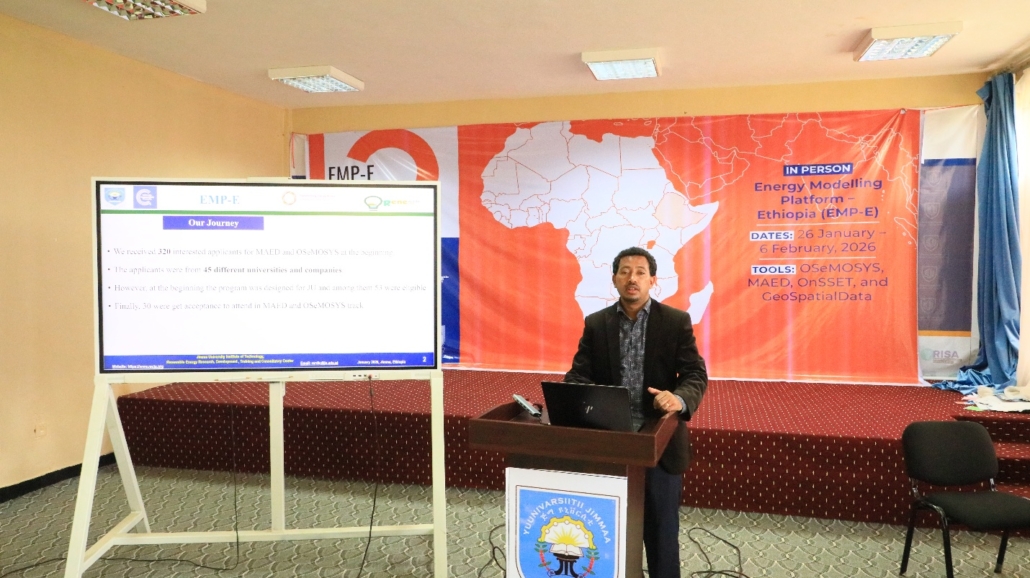
Course facilitator and director of the Renewable Energy Research, Development, Training, and Consultancy Center, Dr Emiyamrew Minaye. Source: EM
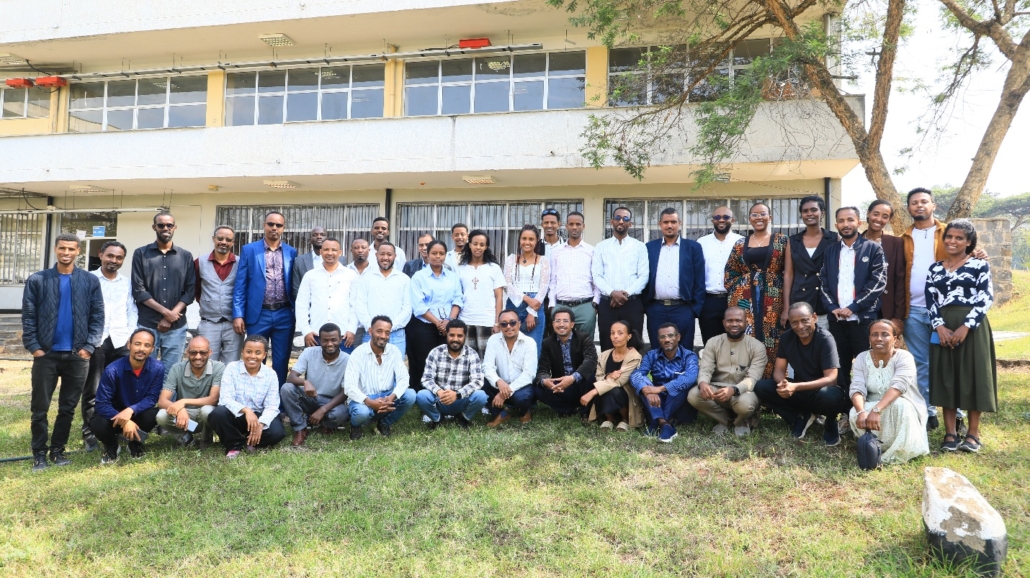
Workshop participants group photo. Source: EM
The vision for EMP-E was clear: to build sustainable, in-country technical capacity for energy planning. We designed a multi-track format to offer parallel training in MAED, OSeMOSYS, ONSSET, and Geospatial Data Management. The response was overwhelming. Over 320 applicants applied for the MAED and OSeMOSYS tracks alone, signaling a huge national demand for these skills. We were able to host a focused cohort of 30 participants, bringing together MSc students and staff from Jimma University with engineers and decision-makers from the Ethiopian Electric Utility (EEU), Ethiopian Electric Power (EEP), and the Ministry of Water and Energy (MoWE).
Key Highlights & Outcomes
What made this platform truly special was the collaborative energy in the room. We had four lead trainers abroad working side-by-side with five Ethiopian co-trainers – a model that not only accelerated learning but ensures this expertise is now rooted locally.
The hands-on, team-based approach meant participants didn’t just learn theory – they built things. By the final day, each track had developed concrete, policy-relevant scenarios for Ethiopia. MAED teams projected energy demand for the manufacturing, agricultural, and household cooking sectors to 2050, while OSeMOSYS groups modeled pathways for transport decarbonisation, universal electrification, and clean cooking transitions. The ONSSET group delivered least-cost electrification assessments for the Amhara, Tigray, Somali, and SNNPR regions. Finally, the Geospatial team built a foundational database and governance framework for electrification planning.

Participant presentations. Source: EM
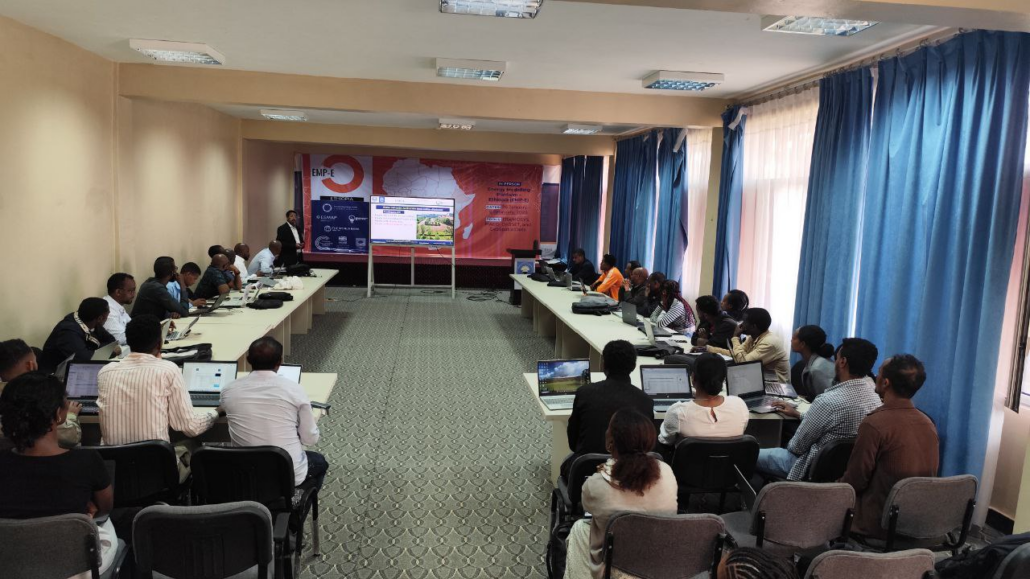
Classroom setting. Source: EM
The week culminated in final presentations where participants expertly translated their technical findings into insights for Ethiopia’s national energy priorities. Seeing a team from MoWE, EEU, EEP, and JU present a joint analysis was a powerful testament to the network we built.
Participant Voices: The Heart of EMP-E
The true measure of success, however, lies in the feedback from those who took part. One participant perfectly captured the sentiment shared by many:
“I am very satisfied by participating in this training. I got much knowledge and skill in energy modeling, and it should be sustainable to train others also.”
A resounding theme from participants was their excitement about the potential for long-term impact. They collectively emphasised the importance of sustainability and scale, suggesting we focus on working with the Ethiopian energy sector stakeholders and developing partners to scale up this platform to accommodate many participants from academia and industry for sustainability and policy-insightful research outputs.
This feedback is our roadmap. It confirms that EMP-E has ignited a desire not just for individual learning, but for building a national community of practice.
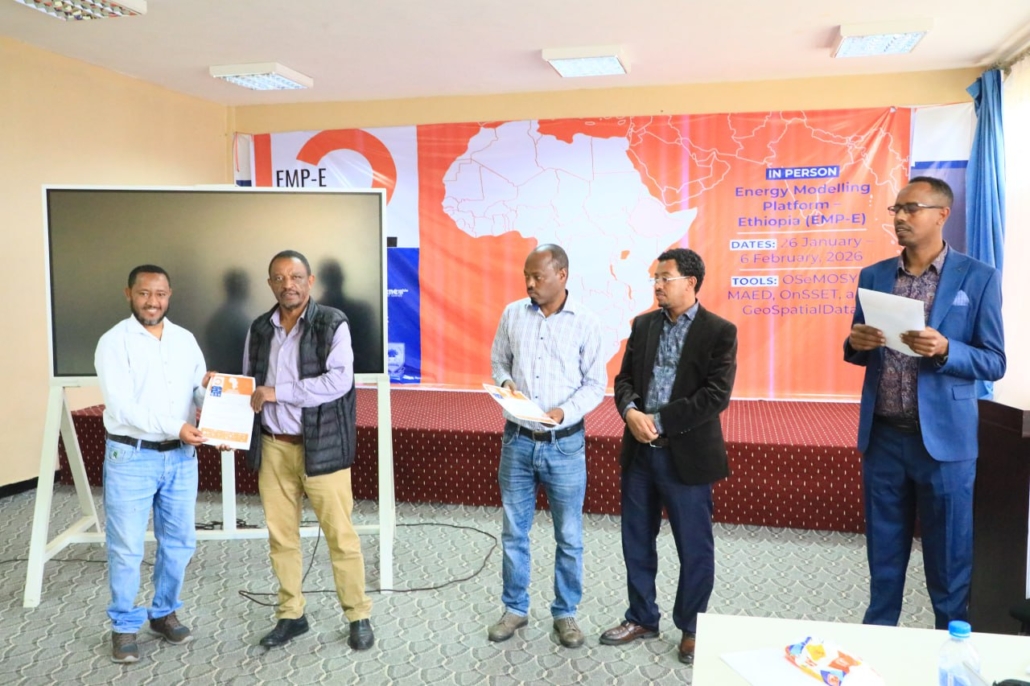
Closing program message and certification by Eng. Efram Wakjira, Scientific Director of Jimma University Institute of Technology. Source: EM
A Heartfelt Thank You
This achievement was a team effort. My deepest gratitude goes to my incredible lead trainers Salisu R. Isihak, Dickson Wachira, Joshua Oduor, Seabilwe Tilodi, and my dedicated co-trainer colleagues at Jimma University – Henok Ayele, Tefera Mekonnen, Birhanu Belete, and Kifle Godana. Your expertise and passion were the backbone of EMP-E. Thank you to our partners, TEA-LP, CCG, and the World Bank, for believing in this vision and providing the essential support to make it a reality.
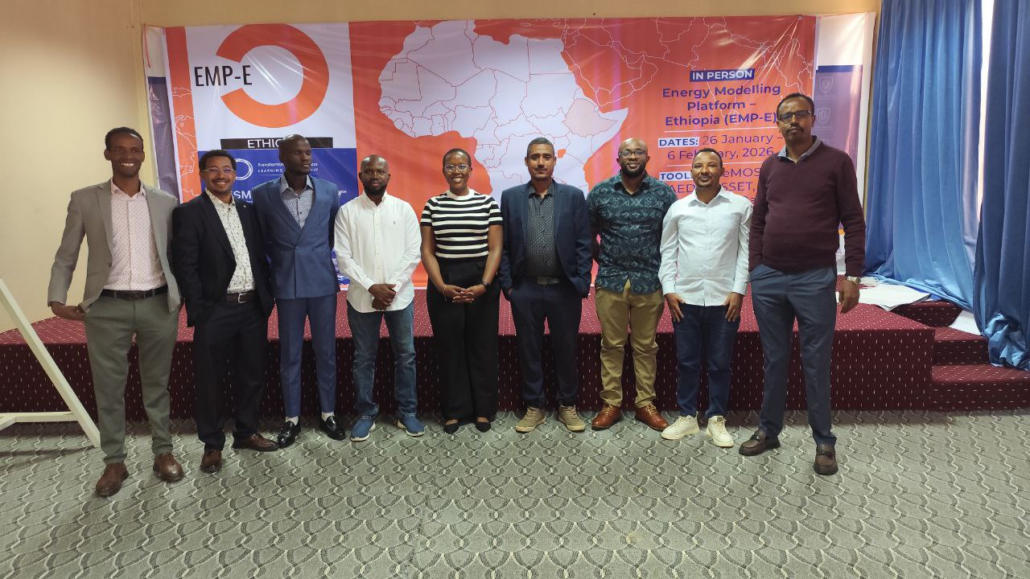
Trainers and co-trainers team photograph. Source: EM
Looking Ahead
EMP-E 2026 was just the beginning. Guided by our participants’ vision, we are committed to institutionalising EMP-E as an annual event, expanding it to include more universities, and formalising a steering committee with our national stakeholders (JU, EEU, EEP, MoWE) and development partners to ensure this capacity grows, endures, and delivers the policy research needed for Ethiopia’s energy transition.
– Written by Dr Emiyamrew Minaye

