
Empowering women in energy access: renewable energy training in Kakuma Refugee Camp
Two complementary activities in Kakuma Refugee Camp, Kenya demonstrated how targeted, flexible funding can strengthen women’s participation in the renewable energy sector while building local capacity for energy access. Both activities, supported by the TEA-LP Rolling Fund, focused on practical solar PV skills development for young people, while also strengthening the leadership, facilitation and project management capacities of the women delivering the training.
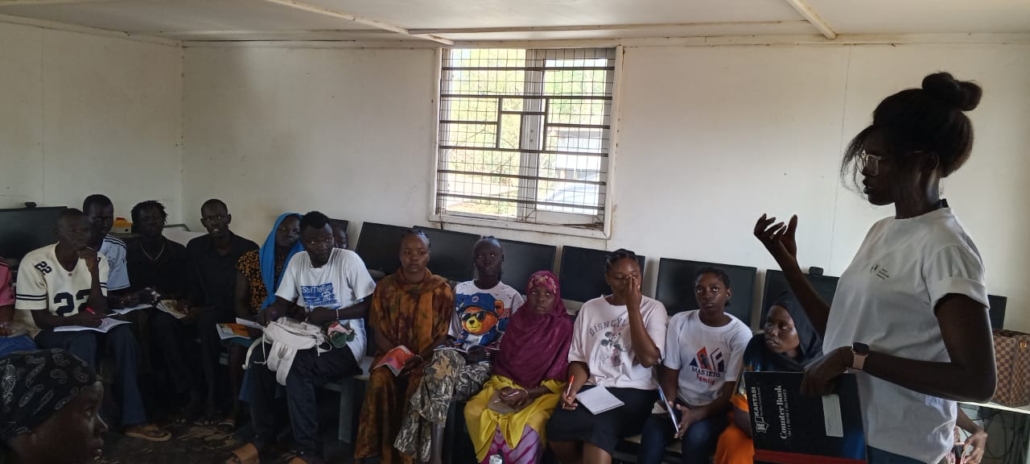
Foundational skills lecture. Source: AO
Together, the activities illustrate the snowball effect of investing in women’s capacity: women are gaining technical skills that can support employment and entrepreneurship, but are also becoming trainers, leaders and role models themselves who can create pathways for other women and young people into the clean energy sector.
Building technical and leadership capacity through local training
Afaf Ajak Obang, a solar installation and maintenance facilitator with Okapi Green Energy Limited in Kakuma Refugee Camp, applied to the TEA-LP Rolling Fund with the goal to strengthen her entrepreneurial and leadership capacity and create opportunities for other women to enter the clean energy sector. Working in a remote refugee-hosting setting, she had seen both the growing demand for affordable and reliable solar solutions and the limited professional development opportunities available to women working in technical energy roles.
Her original proposal was to attend a Clean Energy Entrepreneurship Bootcamp and mentorship programme in Nairobi. However, with TEA-LP’s support, the activity was adapted to respond more directly to the local context. Rather than investing solely in her own professional development, Afaf delivered a one-month, hands-on renewable energy training for 18 young people (ages 20-32) in Kakuma in partnership with SheLeads Refugees, running from May to June 2026.
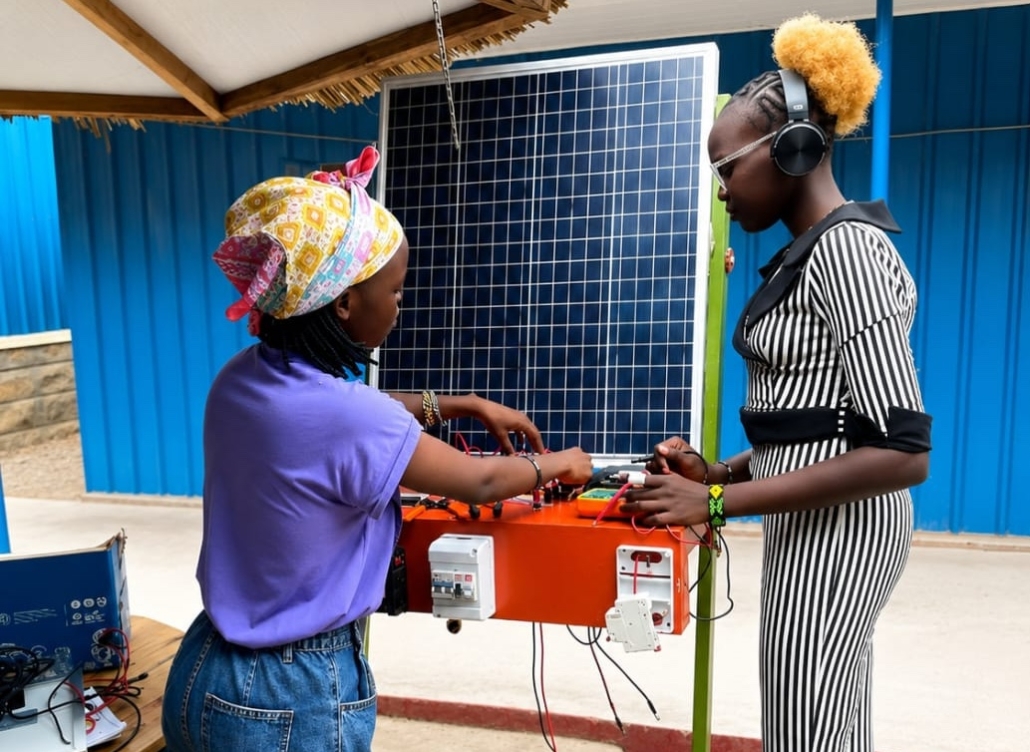
Practical solar installation training. Source: AO
The training covered solar PV installation, system sizing and design, troubleshooting and maintenance, combining theoretical learning with practical exercises. This approach provided participants with technical skills directly relevant to employment and micro-enterprise opportunities in the local solar market. As Afaf shared; “Having completed the training and received their certificates, the participants are now equipped with practical skills that they can use within their communities. They can connect households to solar power and carry out solar installations, providing them with a practical and potentially income-generating skill they can offer locally.”
The activity also represented a significant step in Afaf’s own professional development. Moving beyond her technical role, she gained practical experience in curriculum planning, budgeting, logistics, partnership coordination and training facilitation. She demonstrated the ability to develop and deliver a structured training programme, adapt to changing circumstances and manage the financial and operational demands of implementation. The partnership with SheLeads Refugees also created a platform for future collaboration and further opportunities to reach women and girls in the community.
For Afaf, one of the most important lessons was seeing how technical knowledge can be translated into opportunities for other women when there is a mechanism for sharing and transferring those skills. Afaf shared that the main feedback was that the one-month training duration was not sufficient. Participants requested a longer programme, ideally around six months, to give them more time to develop, practise, and consolidate their skills. This shows the need for targeted training opportunities in clean energy access. The experience has reinforced her ambition to continue creating structured pathways for women into clean energy.
Equipping young people with market-relevant solar and soft skills
A second activity focused directly on practical solar PV training for young people (ages 18-35 years), also in Kakuma Refugee Camp facilitated by Minas John. The initiative responded to the limited access to technical and vocational education available in refugee settings.
The training provided 20 participants with foundational knowledge and practical competencies in solar PV systems, including electrical safety, solar component identification, installation techniques, system testing and maintenance. A learner-centred approach combined classroom instruction, practical demonstrations and supervised installation exercises, enabling participants to translate theoretical concepts into practical skills.
The programme also placed emphasis on confidence, communication, teamwork, problem-solving and leadership. These soft skills are crucial for participants to recognise their strengths, voice their ideas and learn from one another. The programme aimed to equip them with technical knowledge, but also the confidence, resilience and sense of agency to see themselves as capable professionals in the energy sector. This was particularly important in challenging perceptions that technical and engineering careers are primarily male domains. By creating a supportive environment in which young women could undertake practical technical work themselves, the programme helped participants build confidence in their ability to pursue careers in renewable energy.
The activity also strengthened Minas’s capacity too – delivering the programme required skills in project planning, budgeting, coordination, facilitation, monitoring, reporting and stakeholder engagement.
A multiplier effect for women in energy access
Together, these activities demonstrate the value of investing in women in energy. At the participant level, the activities equipped young people with practical solar PV skills that can support future employment, entrepreneurship and further technical education. At the facilitator level, they strengthened both Afaf and Minas’s ability to design and deliver training, manage projects, build partnerships and lead initiatives within their communities.
This creates an important multiplier effect. Building the capacity of one woman working in energy can enable her to share knowledge, mentor others and create new entry points into the sector. In settings such as Kakuma, where access to professional development and technical education can be constrained, locally delivered, practical training can help bridge the gap between interest in clean energy and ability to participate in the sector.
Ultimately, these activities contribute to a more inclusive energy transition by supporting women to build the skills, confidence and leadership experience needed to engage in, and increasingly shape, the renewable energy sector.
The TEA-LP is funded by UKAID under the Transforming Energy Access Platform.

