
Beyond the classroom: turning renewable energy knowledge into community impact
– Written by Hilton Chingosho, University of Zimbabwe
What happens when postgraduate students take their learning beyond the university classroom and into the community? Knowledge becomes practical, learning becomes transformative, and the impact extends far beyond the individual student.
On 25 August 2026, the University of Zimbabwe’s Department of Electrical and Electronic Engineering, with support from the TEA-LP, conducted a community outreach and capacity building programme in Domboshava, Harare, Zimbabwe.
A particularly rewarding aspect of this initiative was the active participation of our Master’s in Renewable Energy Engineering students, who worked alongside academic staff, technicians and renewable energy technology installers to engage directly with the community.
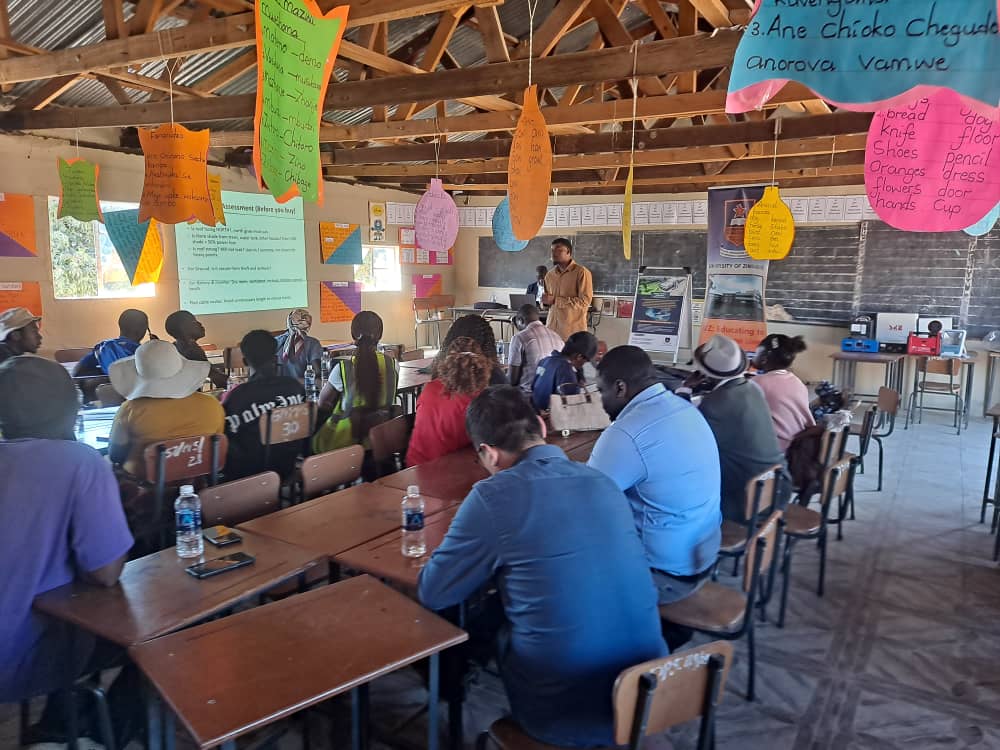
Classroom sessions with community members at Dombashava. Source: HC
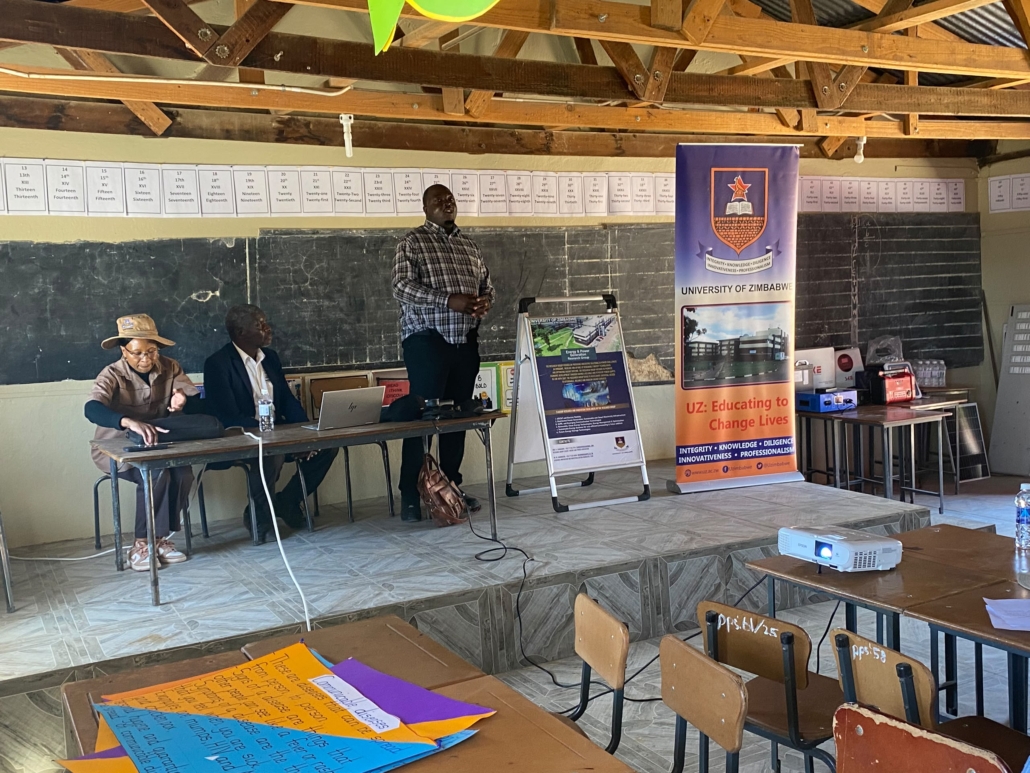
Hilton Chingosho opens the workshop and leads the sessions on Fundamentals to Renewable Energy Technology, Solar Mini grids, Installation and Inspection of Solar PV Systems. Source: HC
Rather than only learning about energy access challenges exclusively through lectures, textbooks and technical assignments, our students had the opportunity to experience these challenges firsthand. They participated in practical demonstrations, responded to community questions, helped dispel misconceptions about solar energy, and supported discussions on selecting, installing, operating and maintaining renewable energy systems.
Through these engagements, students encountered the realities that influence technology adoption: affordability, system sizing, household energy needs, technical knowledge and the importance of matching solutions to local conditions.
The multiplier effect of this learning in action is not difficult to observe; Firstly, students had the opportunity to deepen their own understanding by applying theory to real world situations. Secondly, the student had the opportunity to translate technical knowledge into practical information that households can understand and use. Thirdly, community members were able to share what they learn with their families, neighbours and wider social networks as they benefited from knowledge exchange, potentially improving the quality and safety of installations.
The outreach reminded us that the energy transition is not simply about making technologies available. It is about building the knowledge, confidence and practical skills that enable people to make informed decisions and use these technologies sustainably.
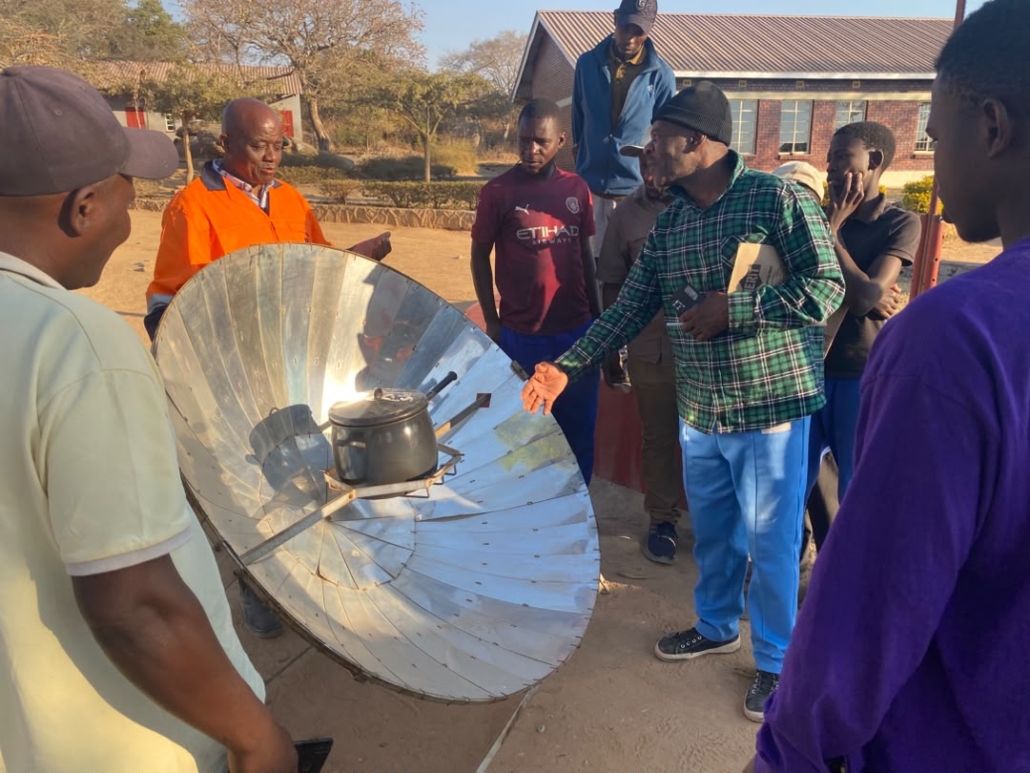
A presenter demonstrates a household-scale parabolic solar cooker, showing how sunlight alone — with no firewood, charcoal or gas — can heat a cooking pot to serving temperature. Source: HC
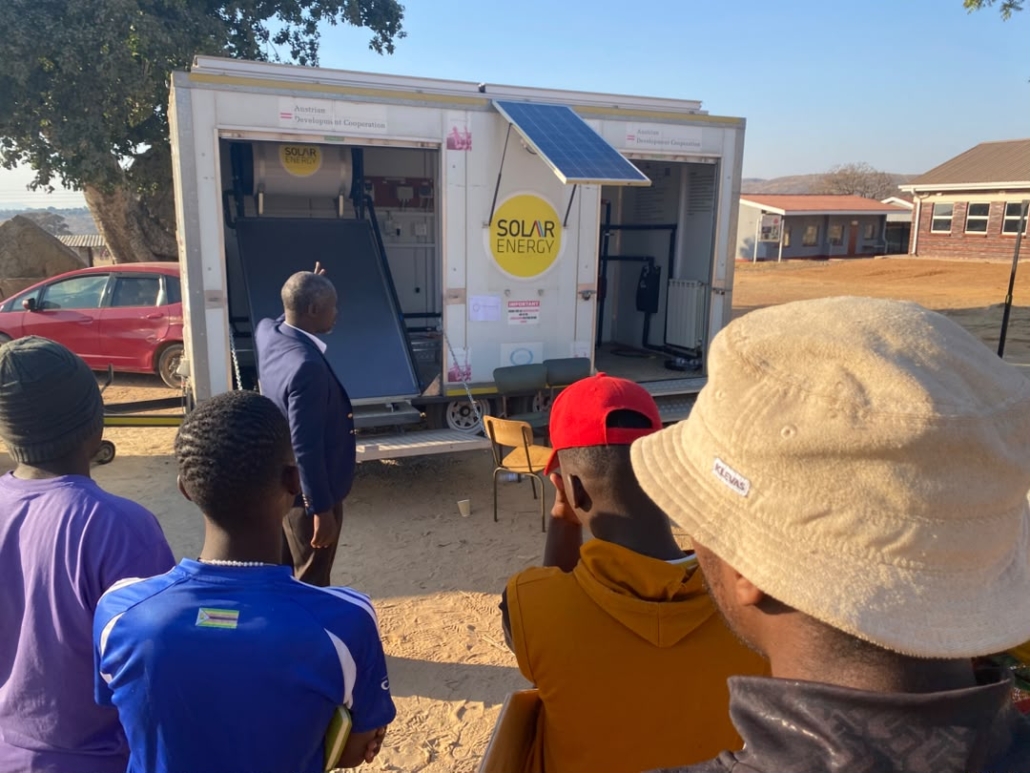
Community members examine the mobile solar water-heating unit — a scaled demonstration of the kind of solar water heater a household could install on its own roof. Source: HC
Importantly, learning flowed in both directions. Our students gained valuable insights into community energy needs, while community members demonstrated a strong willingness to learn and explore renewable energy solutions. Local leadership also expressed interest in continued engagement, particularly initiatives that empower young people to participate in the growing renewable energy sector.
We believe that the true value of postgraduate education lies not only in what students know, but also in what they can do with that knowledge and how many others they can empower through it.
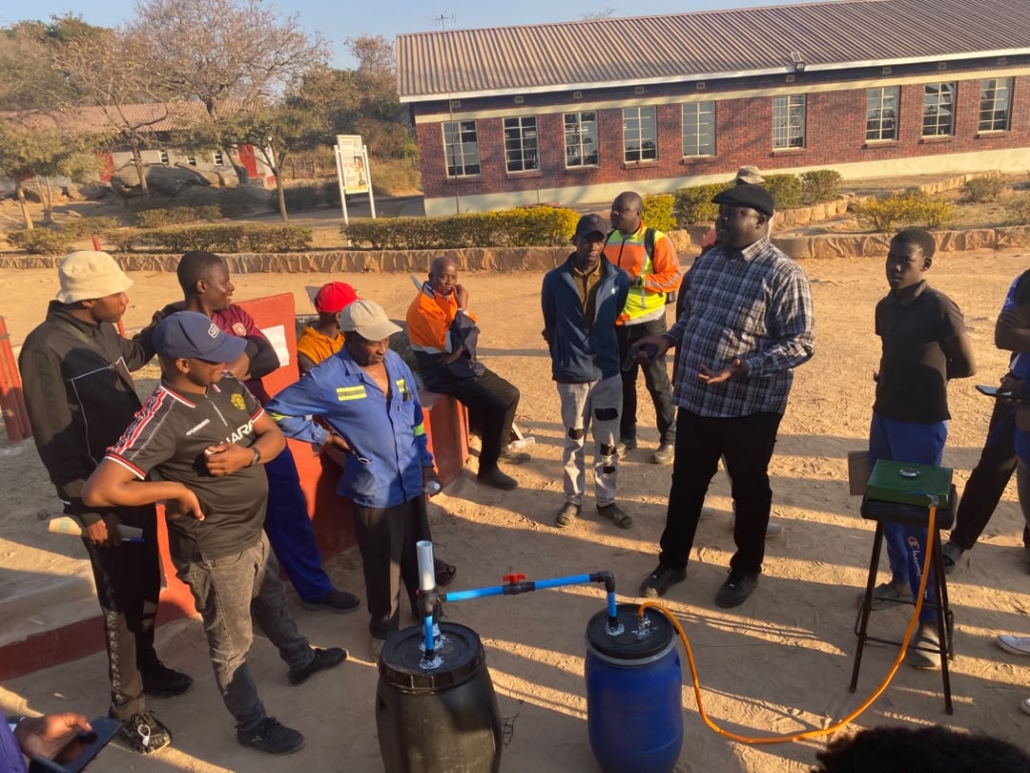
The outdoor demonstration station at Domboshava — a solar panel, biogas digester barrels and a parabolic solar cooker set up for the community to see and try. Source: HC
This is the kind of education we must continue to champion: practical, community connected, responsive to local challenges, and capable of creating impact beyond the university gates.
Through TEA-LP, we are strengthening the connection between higher education, industry and communities while preparing graduates who can contribute meaningfully to a sustainable energy future.
The TEA-LP is supported by the FCDO under the Transforming Energy Access platform.
