
From aspiration to action: How the LUMS – UiTM faculty exchange strengthened collaboration within the TEA-LP Network

Associate Professor Ir Dr Hussain (centre) and Professor Zaffar (right) shake hands at at UiTM. Source: NZ
One of the most exciting TEA-LP Rolling Fund activities thus far has been an impactful faculty exchange between Universiti Teknologi MARA (UiTM), Malaysia, and Lahore University of Management Sciences (LUMS), Pakistan. The exchange was designed to strengthen academic links, support knowledge sharing on energy access, and build working relationships between institutions operating in similar development contexts. Professor Nauman Zaffar from LUMS and Associate Professor Ir Dr Najib Hussain from UiTM led the exchange and shared their experience and learnings with us.
Bridging Institutions Through Shared Purpose
At the heart of the exchange was a shared ambition to move beyond informal collaboration toward structured, long-term engagement. As Associate Professor Ir Dr Hussain reflected, the exchange aimed “to strengthen networking within the TEA-LP partnership” while enhancing curriculum development, research collaboration, and community-focused energy solutions.
Through workshops, laboratory visits, faculty meetings, and site tours, both universities identified concrete areas of mutual interest – from distributed generation and battery energy storage systems to modular energy architectures and sustainability-oriented design. Associate Professor Ir Dr Hussain noted, the exchange “shifted the partnership from aspiration to actionable collaboration.”

Associate Professor Ir Dr Hussain lecture series at LUMS University. Source: NMH
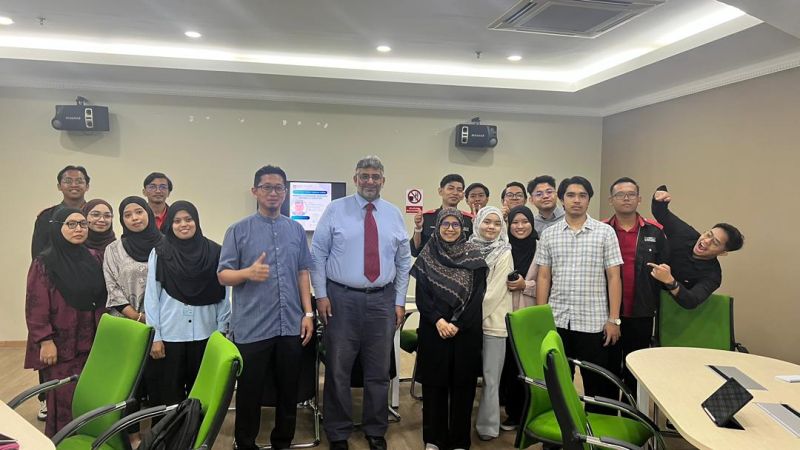
Associate Professor Ir Dr Hussain and Professor Zaffar with UiTM students. Source: NZ
Knowledge Exchange in Action
A central pillar of the exchange was teaching and knowledge sharing. At LUMS, Associate Professor Ir Dr Hussain delivered sessions on grid modernisation, battery energy storage systems (BESS), artificial intelligence in microgrids, and virtual power plants. Students responded with enthusiasm, particularly when exposed to real-world case studies from UiTM. “Their interest in understanding real-world data and system behaviour indicated a shift from theoretical learning to practical applications,” he observed.
At UiTM, Professor Zaffar led workshops on local energy generation, storage models, modular system architectures, and load optimisation. He noted that students were especially engaged by research-driven insights and real-world applications. The sessions opened new perspectives for students, offering “a lens into how locally developed, technically rigorous solutions can directly serve communities facing energy access challenges.”
Beyond lectures, both professors highlighted the richness of academic dialogue. Students at both institutions asked probing questions about technical methodologies, climate-related challenges, and regional energy contexts. This intellectual exchange underscored a key strength of the TEA-LP network: the ability to connect diverse regional experiences into a shared learning ecosystem.
Strengthening the TEA-LP Network
One of the most significant outcomes of the exchange was its impact on the broader TEA-LP network. By facilitating face-to-face engagement among faculty, researchers, and institutional leaders, the exchange strengthened interpersonal and institutional relationships across partner universities.
Associate Professor Ir Dr Hussain emphasised that meeting TEA-LP members and collaborators – including faculty at LUMS and researchers at NUST in Islamabad – helped build “a strong foundation for future joint proposals, co-supervision of students, and development of graduate-level content tailored to regional energy access challenges.” Meanwhile, Professor Zaffar described the exchange as creating “the scaffolding for an enduring relationship,” grounded in shared understanding and complementary strengths.
Importantly, the exchange also extended beyond bilateral collaboration. Discussions with researchers at NUST and the Faraday Institution Battery Ambassadors led to emerging joint research ideas and expanded the network of collaborators.
From Dialogue to Collaboration
Both academics highlighted the value of reciprocal learning: UiTM shared its sustainability-driven design approach and alignment with Malaysia’s renewable energy goals, while LUMS showcased its strengths in microgrids, power electronics, and commercialisation pathways.
As Professor Zaffar observed, the exchange enabled “a genuine two-way flow of ideas,” allowing both institutions to identify complementary expertise and opportunities for joint research and teaching. These interactions have already sparked discussions on co-supervision of postgraduate students, joint proposals, comparative case studies, and professional development courses.
Equally important was the cultural and institutional learning that accompanied the academic exchange. Associate Professor Ir Dr Hussain was impressed by LUMS’s multidisciplinary research model and strong links to industry. Professor Zaffar, in turn, highlighted UiTM’s integration of sustainability into engineering education and its close-knit academic culture.
Lasting Impact and Future Outlook
Beyond immediate outcomes, both professors underscored the long-term value of such exchanges. They pointed to opportunities for co-teaching, joint curriculum development, student mobility, and collaborative research as key pathways for sustaining momentum. As Associate Professor Ir Dr Hussain noted, these initiatives can “significantly advance energy education and innovation” across regions.
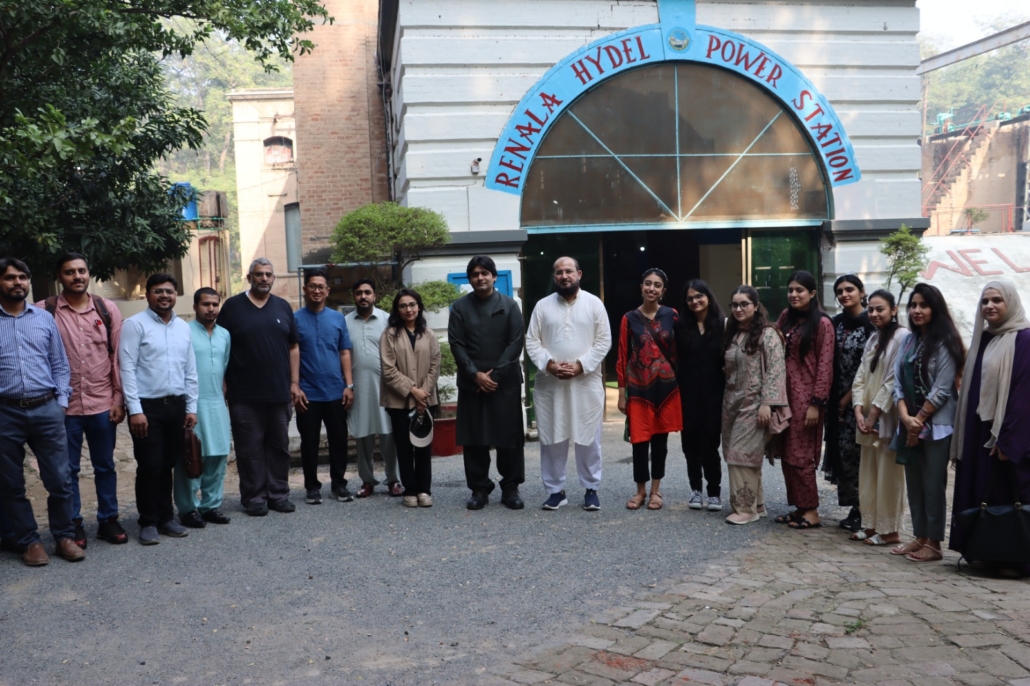
Field trip to the historic Renala Khurd Hydropower Plant, built in 1925 on the Lower Bari Doab Canal by Sir Ganga Ram. Source: NMH
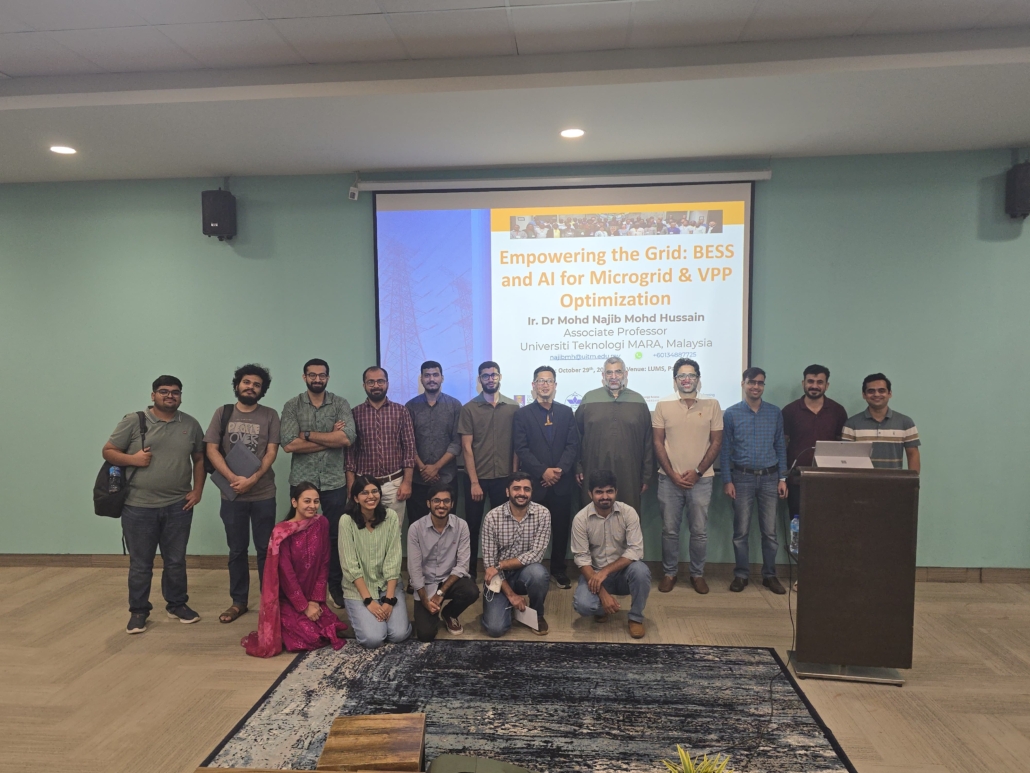
Cohort shot of LUMS students engaged in Associate Professor Ir Dr Hussain’s lecture series. Source: NMH
At the same time, both scholars emphasised the importance of follow-up mechanisms to maintain and deepen collaboration. Suggestions included structured post-exchange activities, joint workshops, and digital platforms for continuous knowledge sharing – insights that will inform the future design of TEA-LP-supported exchanges.
A Model for Networked Collaboration
The LUMS-UiTM faculty exchange illustrates the power of targeted academic mobility within a networked partnership. Supported by the TEA-LP Rolling Fund, the exchange not only strengthened bilateral ties but also added value to the broader TEA-LP community. By fostering trust, shared understanding, and concrete collaborative pathways, it demonstrated how universities across the Global South can co-create knowledge, leverage complementary strengths, and collectively address complex energy access challenges.
As Professor Zaffar aptly summarised, “the success of an exchange lies as much in building relationships as it does in delivering content.” In that sense, the LUMS – UiTM exchange stands as a compelling example of how partner-driven activities can support capacity building in energy access.

